Cal Poly Global Site Tag

Google Tag Manager


Cal Poly AI² Immersion Lab


CAL POLY AI² IMMERSION LAB · OFFICE OF THE PROVOST

Sharper Decisions,


Stronger Business.


    Change Management. Because humans come first.


A universitywide initiative bringing Cal Poly faculty and industry partners into the same room, on a founding premise: technology creates durable value only when critical thinking, communication, and human judgment lead.

AI Literacy Program  ·  Agile AI Build  ·  Industry Partnerships  ·  Campus Partnerships


About the Lab Meet the Founding Director AI at Cal Poly AI Faculty Fellows

UNVEILED AT CAL POLY AI DAY · OCT. 22, 2026  ·  Read the recap


 About the Lab

The Cal Poly AI² Immersion Lab is a universitywide initiative. Now in its first year, the Lab has grown from concept to a functioning, client-facing operation.


Its founding premise: technology creates durable value only when critical thinking, communication, and human judgment lead. Its mandate is a repeatable model for bringing AI into the workplace responsibly and measurably, delivered through two integrated tracks.

AI² = AI Literacy × Agile AI Build.


The inaugural cycle serves California agriculture, where family-owned enterprises face real operational pressure and limited access to applied AI expertise. Through on-site executive and manager immersions, deep-dive discovery, and custom Agile AI Builds, the Lab is testing the methodology with live clients, real data, and measurable outcomes.


Every module is built as a plug-and-play asset: hands-on practice segments, prompt libraries, verification drills, and change management frameworks designed to transfer to the next engagement.


Beyond the two tracks, the Lab supports the decisions that sit above them. In partnership with experts and executive leadership at the Orfalea College of Business, the Lab advises on AI governance, AI strategy and deployment decisions, and operating model reviews, and it helps organizations build and sustain communities of practice so that what a leadership team learns in the room becomes how the organization works. Change management runs through all of it.


Inside Cal Poly, the Lab is building partnerships with the university's existing learning and development hubs, so that field-tested, applied research and workshops reach faculty, staff, and students through one centralized, collaborative environment rather than a dozen separate doors. That work spans divisions, departments, and mission-critical partnerships across campus. The Lab does not wait to be asked: it reaches out proactively, wherever there may be common ground to find.


The pilot is intended as proof of concept for a sector-agnostic AI Literacy and Agile AI Build engine with the potential to bring the same rigor to manufacturing, healthcare, public agencies, and education.


If the model holds, the Lab could scale across the California State University system, positioning Cal Poly as an AI hub for the CSU and creating a pipeline where faculty expertise, student talent, and industry need meet in a single, repeatable model.
 

    Critical thinking, emotional intelligence, and human potential, working in harmony with emerging technology.


Change Management

Because AI changes the technology. Humans change the organization.


AI Literacy

On-site executive and manager immersions in a one-day or two-day format: train the AI on your business, verify what it tells you, then move from personal productivity to enterprise workflow reinvention, with working comprehension of machine learning, data analytics, and agentic AI integration.


Agile AI Build

Custom builds against a partner's actual data and processes, from deep-dive discovery to working prototype, with clear follow-on paths to integration or full development.


Governance & Communities of Practice

Advisory support for AI governance, strategy and deployment decisions, and operating model reviews, delivered with experts and executive leadership at the Orfalea College of Business.
 

The Lab helps partners stand up communities of practice that keep the learning alive after the engagement ends.


Campus Partnerships

Working with Cal Poly's existing learning and development hubs, divisions, and departments to bring the Lab's field-tested research and workshops to faculty, staff, and students in one centralized, collaborative environment.
 

Have a program, a team, or a course that could use it? The Lab reaches out first, and welcomes the same in return.

 
 LEARN BY DOING · THE PIPELINE 

One method, three directions.

The same live work moves through faculty, students, and industry, and each hands it forward. When a classroom, a career, and a company practice one method on one problem at the same time, they stop being separate places working in silos. That has not existed before, and it is open to everyone who takes part. This creates a new ecosystem of AI fluency and workforce-ready integration with real-world application.


Step 1

Faculty

Who apply it:


Faculty drawn from across the colleges carry Learn by Doing out of the classroom and into the client room, delivering literacy, builds, and change management against live data.


Delivering theory and practice at the speed of industry.


Step 2

Students

Who practice it:


Real-world practice and apprenticeship on actual engagements: students build, present, and are accountable to a client, with faculty alongside them.

The student club segment at Mustang Family Weekend on Oct. 3 was the first public proof.


Building a portfolio that is field-tested and workforce-ready.


Step 3

Industry

Who integrate it:


Partners get Learn by Doing delivered: working prototypes, trained managers, and adopted practice, plus a pipeline of graduates who already know how to work this way from day one.


This creates a win-win dynamic where learning and development is a joint effort with a gold-standard result.


 A Letter from the Founding Director
Why the Lab exists, what the unveiling meant, and what comes next.


THE MILESTONE · SUMMER 2026

Founded, staffed, and at work

In the summer of its first year, the same year Cal Poly marks 125 years of Learn by Doing, the Lab was founded, sponsored, staffed, and put to work with live clients before its public unveiling. Delivery first, reveal second.

 
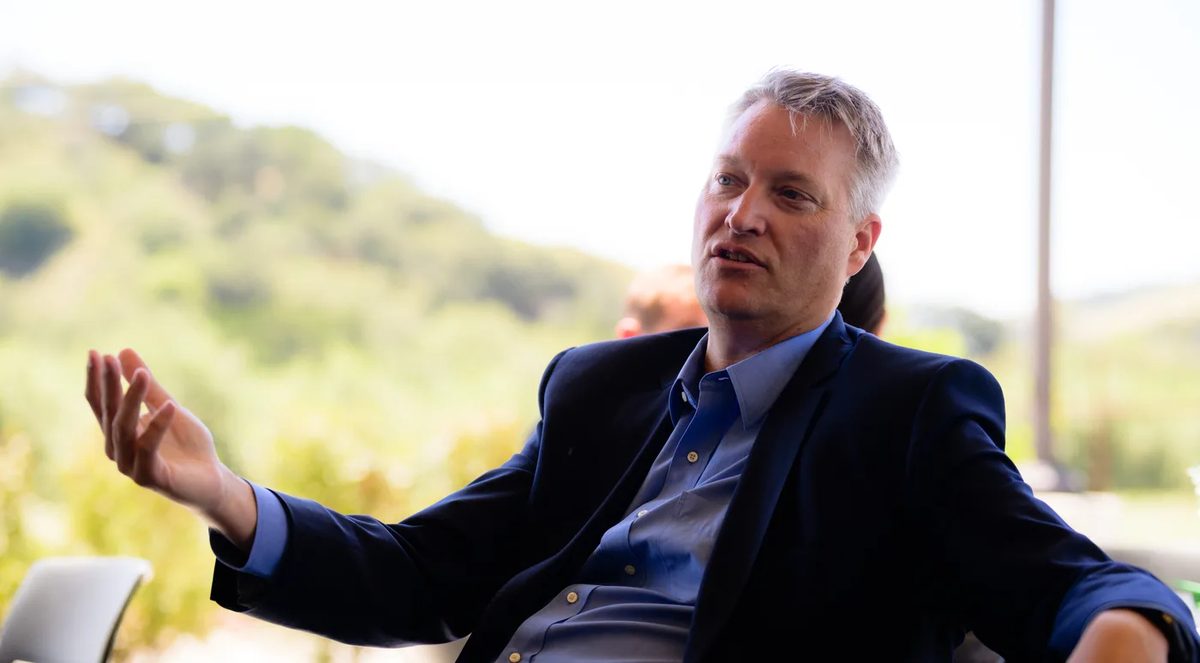
Martin Mehl in conversation
 
Director, Martin Mehl in conversation: a leadership team, a question, and a plan by the end of the afternoon.
 
 
Cal Poly, 125 years of Learn by Doing Cal Poly AI² Immersion Lab
OFFICE OF THE PROVOST · DIVISION OF ACADEMIC AFFAIRS


Dear colleagues, partners, students, and families,

I came to this work as a communication scholar, not a computer scientist. For twenty-three years my job at Cal Poly has been to help people say what they mean and understand what they hear. Artificial intelligence has not changed that job. It has raised the stakes on it.
 

Here is what our team sees in boardrooms, classrooms, and family businesses across California: AI everywhere, fluency behind. Tools arrive faster than judgment, and the result is activity, not transformation.
 

The Lab exists to answer that. Its founding premise is simple to state and hard to practice: technology creates durable value only when critical thinking, communication, and human judgment lead. That is why change management comes first, as a co-equal deliverable rather than an afterthought. A capable tool without an adopted practice is a cost, not a capability.
 

From there, two integrated tracks. AI Literacy teaches executives and managers to think with AI without outsourcing their judgment to it. Agile AI Build turns what the room learned into a working prototype against live data. Literacy without a build is a seminar. A build without literacy is a demo.
 

Above both tracks sit the decisions that determine whether any of it lasts: how an organization governs AI, where it chooses to deploy it, and how its operating model must change to carry it. Here the Lab works in partnership with experts and executive leadership at the Orfalea College of Business, advising on governance, AI strategy, deployment, and operating model reviews, and helping each partner build a community of practice that outlives the engagement. Training that ends when the trainer leaves is not training. It is an event.
 

AI literacy is also no longer optional. Article 4 of the EU AI Act requires every provider and deployer of AI systems to ensure a sufficient level of AI literacy among the people who operate them, a duty that has applied since February 2025 to any organization whose products or data reach the European market. It sits alongside the GDPR's limits on automated decision-making, the ISO/IEC 42001 standard for AI management systems, the NIST AI Risk Management Framework in the United States, and a growing set of state rules, including Colorado's AI Act and California's regulations on automated decision-making technology.

The direction is the same everywhere: organizations are expected to show that the humans around their AI systems understand them. A verified, documented standard of literacy is what makes that claim defensible, and it is the standard the Lab teaches to.


    AI is a spectrum, not a switch. The Lab teaches the whole spectrum, and it teaches where each organization belongs on it today: what stays human, what an agent may earn, and how to tell the difference on Monday morning.


At one end of that spectrum sits a chatbot that drafts an email; at the other, agents that run a workflow with a human at the checkpoint. In between are the analytics, the sensor data, and the models trained on your own business. We chose California agriculture as our proving ground on purpose. If the method holds where the margins are thin and the data is messy, it will hold in manufacturing, healthcare, public agencies, education, and the many sectors in between.


To the President and the Provost who decided Cal Poly should build this, to the deans who lent their faculty, to the partners who opened their books and their fields, and to the students who arrived with questions of their own: thank you. This is Learn by Doing, applied to the defining technology of the decade.


San Luis Obispo, California
October 2026


 Leadership

The Lab is led by its Founding Director and guided by an independent industry advisor.

 
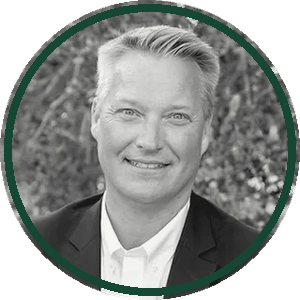
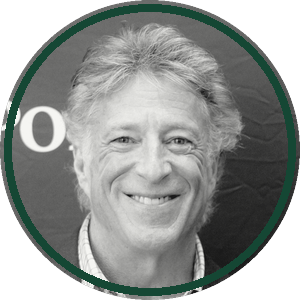
Martin Mehl, Founding Director  

FOUNDING DIRECTOR

Martin Mehl


Cal Poly AI² Immersion Lab
Faculty | Communication Studies, Scholar-in-Residence, Orfalea College of Business
 
"Sharper Decisions, Stronger Business"
 

Martin arrived in the United States from Germany as a high school exchange student, studied in the Midwest and on the East Coast, and settled in California. Living the dot-com era across the country, with European roots, shaped his expertise in global digital policy, from GDPR to Article 4 AI literacy compliance. Grounded in research and fueled by decades of mentee feedback, he keeps sharpening his approach to technology and strategy.
 

His Central Coast roots run deep, anchored by his wife, a UCSB IT pioneer, and their twin sons. The boys graduated from Orcutt Academy HS in a pioneering cohort, earning dual associate degrees alongside their high school diplomas.

As a new Cal Poly parent to a junior-standing computer science major, with his twin studying hospitality at UNLV, Martin brings direct empathy to the student experience. Their family path reflects his conviction: hard work and mentorship keep the human in the loop.


Across three decades in academia, broadcasting, consulting, and mentorship, he has built bridges between human capability and AI, collaborating with Fortune 500 brands and Ivy League universities. His most significant network is his former students and junior faculty, mentees whose inside view now reaches across functions and industries. He insists on practical capability over awareness: knowing the concepts means nothing if you do not know what to execute on Monday morning.
 

Martin serves on boards in his community and in neuro-literacy/cognitive and behavioral research. He leads the Lab and has spent two decades building methods for the dynamic synergy between humans and artificial intelligence, from the classroom to the boardroom.
 

Book a conversation mmehl@calpoly.edu
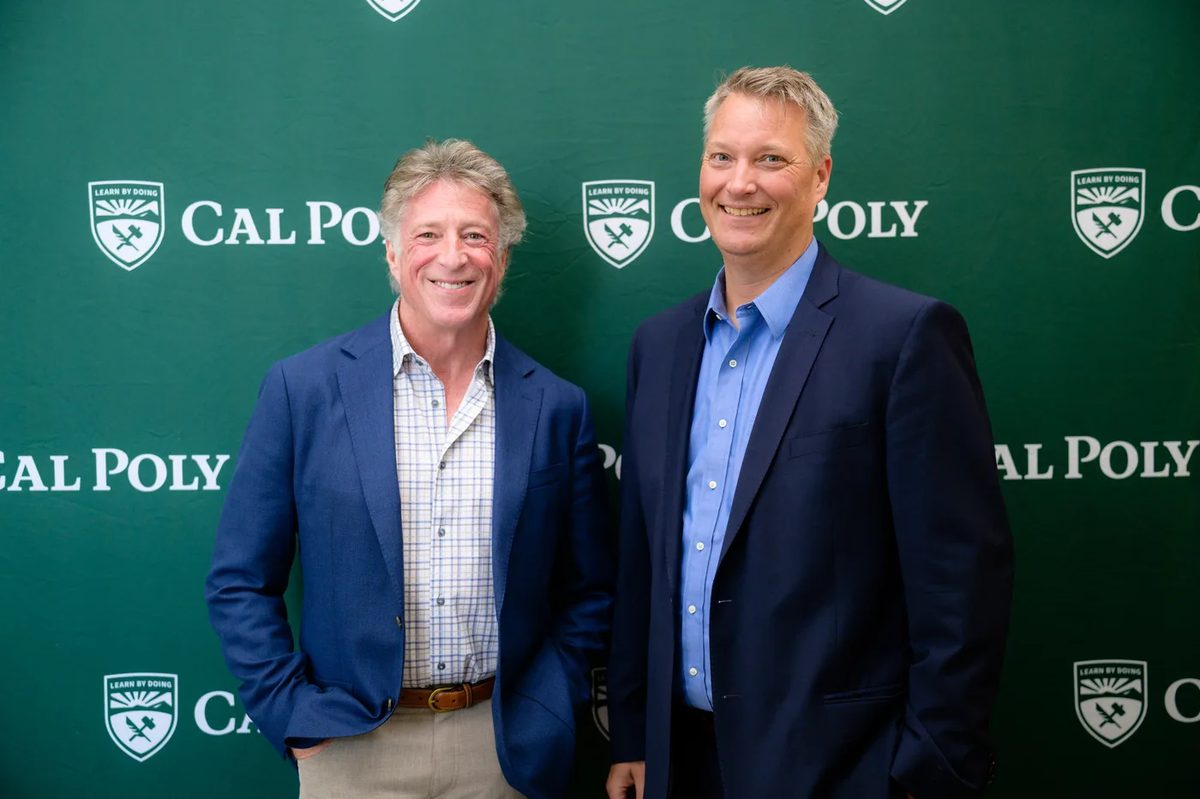
Martin Mehl and Stan Van Vleck
Founding Director Martin Mehl with Stan Van Vleck, the Lab's independent industry advisor. Learn by Doing, applied to the working world.

With gratitude

A Lab like this does not start on a faculty member's initiative alone.

It starts when a president and a provost decide the university should build it, and when an industry advisor keeps asking whether the work will hold up in a real business.


Dr. Jeffrey D. Armstrong


Dr. Jeffrey D. Armstrong

9th President, Cal Poly


A first-generation college student raised on a family farm in western Kentucky, Armstrong earned a bachelor's degree in agriculture from Murray State University and master's and doctoral degrees in physiology from North Carolina State University.


Dr. Al Liddicoat


Dr. Al Liddicoat

Provost & EVP for Academic Affairs


Liddicoat holds a Ph.D. and a master's degree in electrical engineering and a master's degree in industrial engineering and engineering management, all from Stanford University. He earned his bachelor's degree in electronic engineering from Cal Poly.


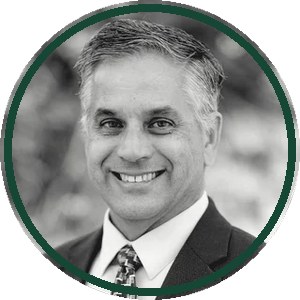
Stan Van Vleck


Stan Van Vleck

Independent Industry Advisor


The voice of the client in every planning room. His outline shaped the training format, and his standard, response accuracy first, became the Lab's. He holds a B.S. in Ag Business from Cal Poly, where he was named the College of Agriculture's outstanding graduate.


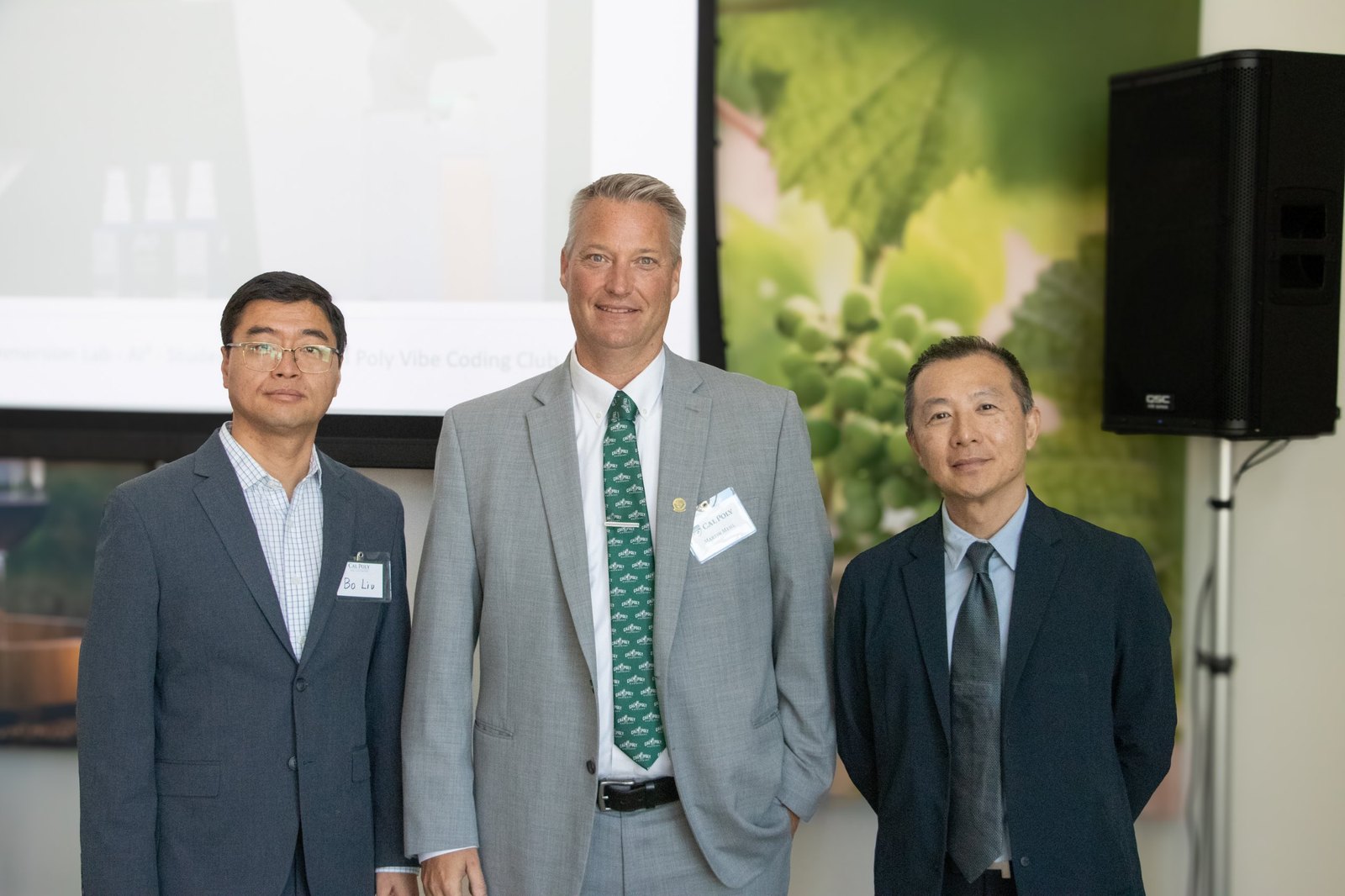
Dr. Bo Liu, Principal Lead for Agile AI Build, Founding Director Martin Mehl, and Dr. Leida Chen, Principal Lead for AI Literacy, at the Lab's fall showcase
The two tracks and the Director who connects them: Dr. Bo Liu, Principal Lead, Agile AI Build; Founding Director Martin Mehl; and Dr. Leida Chen, Principal Lead, AI Literacy. AI² = AI Literacy × Agile AI Build, in one frame.


 Faculty & Team

Two Principal Leads carry the tracks, four Principals in fall 2026 carry the disciplines, and two administrative partners in the Office of the Provost keep it moving. Each name opens that colleague's department page.

 
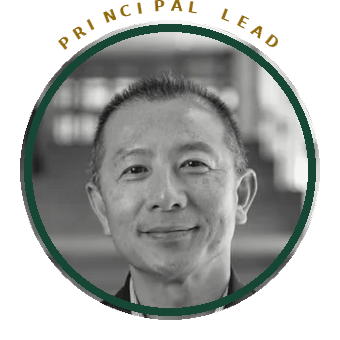
Dr. Leida Chen, Principal Lead

Dr. Leida Chen

AI Literacy
Business Analytics & Information Systems
AI Fellow, OCOB

Orfalea Business Analytics faculty
 
 
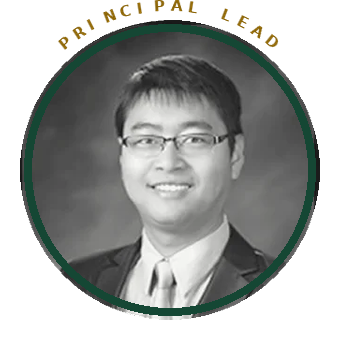
Dr. Bo Liu, Principal Lead

Dr. Bo Liu

Agile AI Build
BioResource & Agricultural Engineering (BRAE)
CAFES

BRAE faculty profile
 
 
Dr. Bingyi (Nicole) Wu

Dr. Bingyi (Nicole) Wu

Principal
Human-AI Collaboration & Blockchain
OCOB

Orfalea Information Systems
 
 
Dr. Page Chen

Dr. Page Chen

Principal
Cognitive Engagement & Evidence Architecture
Co-Founder, elevator9

elevator9 team page
 
Dr. Matthew Grieshop

Dr. Matthew Grieshop

Principal
Director, Grimm Family Center (GFC)

Independent academic capacity

Grimm Family Center faculty and staff
 
 
Dr. Xiaowei Cai

Dr. Xiaowei Cai

Principal
Director, Farm Credit Finance & Appraisal
Agribusiness, CAFES

Agribusiness faculty profile
 
 
Val Wright

Val Wright

Administration
Program Coordinator
Office of the Provost

Office of the Provost directory
 
 
Dr. Simone Aloisio

Dr. Simone Aloisio

Administration
Associate Vice Provost for Academic Personnel
Office of the Provost

Academic Personnel


 Friends & Supporters of the Lab

The deans whose colleges lend the Lab its faculty, the director whose AI Factory gives it compute, and the colleagues who lend it their expertise. The growing circle behind the Lab.

 
Dr. Damon Fleming

Dr. Damon Fleming

Dean
Orfalea College of Business (OCOB)
 
 
Dr. Brian Horgan

Dr. Brian Horgan

Dean
College of Agriculture, Food & Environmental Sciences (CAFES)
 
 
Dr. Lynnette Zelezny

Dr. Lynnette Zelezny

Interim Dean
College of Engineering
 
 
Dr. Chris Lupo

Dr. Chris Lupo

Director
Noyce School of Applied Computing
 
 
Dr. Brennan Davis

Dr. Brennan Davis

Director & Professor
MS Business Analytics Program, OCOB


 Selected Publications & Recognition
The Lab's methods rest on a research record: two #1 national textbooks, book chapters, refereed articles in the Proceedings of the National Academy of Sciences, Functional Ecology, Agricultural Economics, Computers in Human Behavior, Sensors, and the Journal of Information Systems Education, an IEEE award, and invited keynotes. Listed newest first; the Founding Director's entries are limited to books, awards, keynotes, and co-authored work. Gold rules mark books and awards.

2026


Martin Mehl and Dr. Arda Gozen

Mentorship Communication: The Blueprint

Whitepaper on Forward-Deployed Engineering Education (FDEE), Mehl and Gozen, 2026 · Harold Frank Engineering Entrepreneurship Institute, WSU


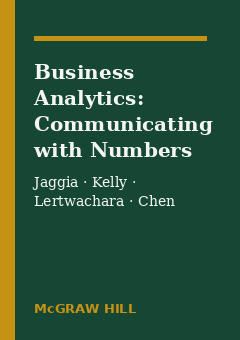
 Communicating with Numbers cover  

Dr. Leida Chen with S. Jaggia, A. Kelly, and K. Lertwachara

Business Analytics: Communicating with Numbers

McGraw-Hill · 1st edition 2019, 2nd 2022, 3rd 2026, Evergreen edition forthcoming 2028

#1 National Textbook, three editions


Dr. Bo Liu

RUGGEDIZE Deep Tech Conference

Keynote speaker · Salinas, California · August 2026
 

Keynote, 2026
 

Martin Mehl

One lens, three focal lengths

Featured Keynote, ScreenPal Innovative Learning Summit, July 2026


Martin Mehl and Dr. Markus Bernhardt

AI Everywhere, Intelligence Nowhere

The AI Journal (UK)

2025


Dr. Bingyi (Nicole) Wu

IEEE TEMS Technical Achievement Award

IEEE Technology and Engineering Management Society, 2025

Award, 2025


Y. Zhan and Dr. Leida Chen

Harness the Power of Interactive Large Language Models in Teaching

Journal of Information Systems Education, 36(3), 2025


L. Picone, C. Decock, K. Steenwerth, Dr. Matthew Grieshop, C. Lazcano, et al.

On-Farm Assessment of Long-Term Impacts of Regenerative Management on Vineyard Soil Health

European Journal of Soil Science, 76(5), 2025

2024


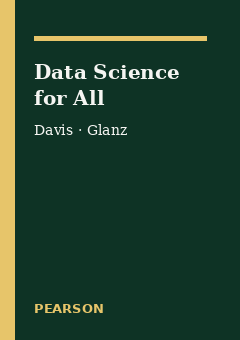
Data Science for All cover  

Dr. Brennan Davis and Dr. Hunter Glanz · Supporter & SME

Data Science for All

Pearson, 1st edition, 2024 · the STAR framework for Learning by Doing in data science

#1 National Textbook


B. Liu, M. A. Fernandez, T. M. Liu, S. Ding

Investigation of using hyperspectral vegetation indices to assess brassica downy mildew

Sensors, 2024

2023


Dr. Matthew Grieshop

Allan Romander Esteemed Mentor Award

Western Region Certified Crop Advisers, 2023 · with the Michigan State University Lorena V. Blinn Endowed Teaching Award, 2021

2020 to 2022


M. S. Helmberger, L. K. Tiemann, and Dr. Matthew Grieshop

Towards an Ecology of Soil Microplastics

Functional Ecology, 34, 2020


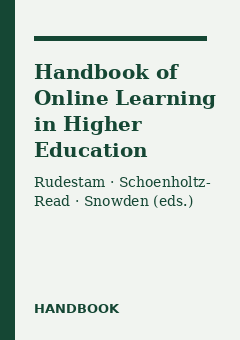
Handbook of Online Learning in Higher Education cover  

Dr. Page Chen with Ben Betts · Martin Mehl

Handbook of Online Learning in Higher Education

Edited by Kjell E. Rudestam, Judith Schoenholtz-Read, and Monique Snowden · 40 leading educators on the future of online learning

Book chapters


Dr. Leida Chen, R. Nath, and Z. Tang

Understanding the Determinants of Digital Distraction

Computers in Human Behavior, 104, 2020 · one of more than sixty refereed journal articles

2017 and earlier


Martin Mehl and Dr. Luanne Fose

The Digital Academic Revolution series

Six ERIC-indexed articles on captured communication and digital feedback in higher education

OLC Effective Practice Award, 2017


Dr. Xiaowei Cai, K. W. Stiegert, and S. R. Koontz

Regime Switching and Oligopsony Power: The Case of U.S. Beef Processing

Agricultural Economics, 42(1), 2011


Dr. Xiaowei Cai, K. W. Stiegert, and S. R. Koontz

Oligopsony Fed Cattle Pricing: Did Mandatory Price Reporting Increase Meatpacker Market Power?

Applied Economic Perspectives and Policy, 33(4), 2011


J. R. Miller, P. S. McGhee, P. Y. Siegert, C. G. Adams, J. Huang, Dr. Matthew Grieshop, and L. J. Gut

General Principles of Attraction and Competitive Attraction as Revealed by Large-Cage Studies of Moths Responding to Sex Pheromone

Proceedings of the National Academy of Sciences, 107(1), 2010


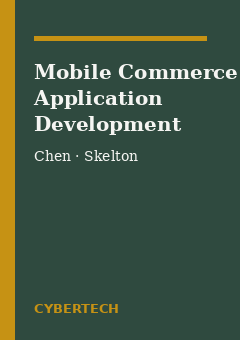
Mobile Commerce Application Development cover  

Dr. Leida Chen and G. W. Skelton

Mobile Commerce Application Development

CyberTech Publishing, 2005


PART OF AI AT CAL POLY

The applied arm of Cal Poly's AI effort.

Cal Poly's AI infrastructure and education efforts run across teaching, research, students, and responsible use.


The Lab is where they are applied: inside the university with faculty and students, and outside it with industry and community partners.

Explore AI at Cal Poly
Meet the AI Faculty Fellows


 Updates & Resources

 OCTOBER 2026 · THE LAB'S OKTOBERFEST · CONCLUDED 

The doors opened in October: not simply to campus, but to the community beyond it.

For the first time, consulting, communication, and change management came together in public and were presented as one integrated discipline, grounded in human judgment, centered on people, and built with a keen eye toward AI literacy, AI fluency, and the realities of organizational transformation.

Mustang families had the first look on Oct. 3. The campus and industry followed on Oct. 22.

This is when AI² moved from an idea to a living model: visible, tangible, and now at work in the world.


LOOKING BACK · THURSDAY, OCT. 22, 2026
 

The Lab, unveiled. The team, in public. 

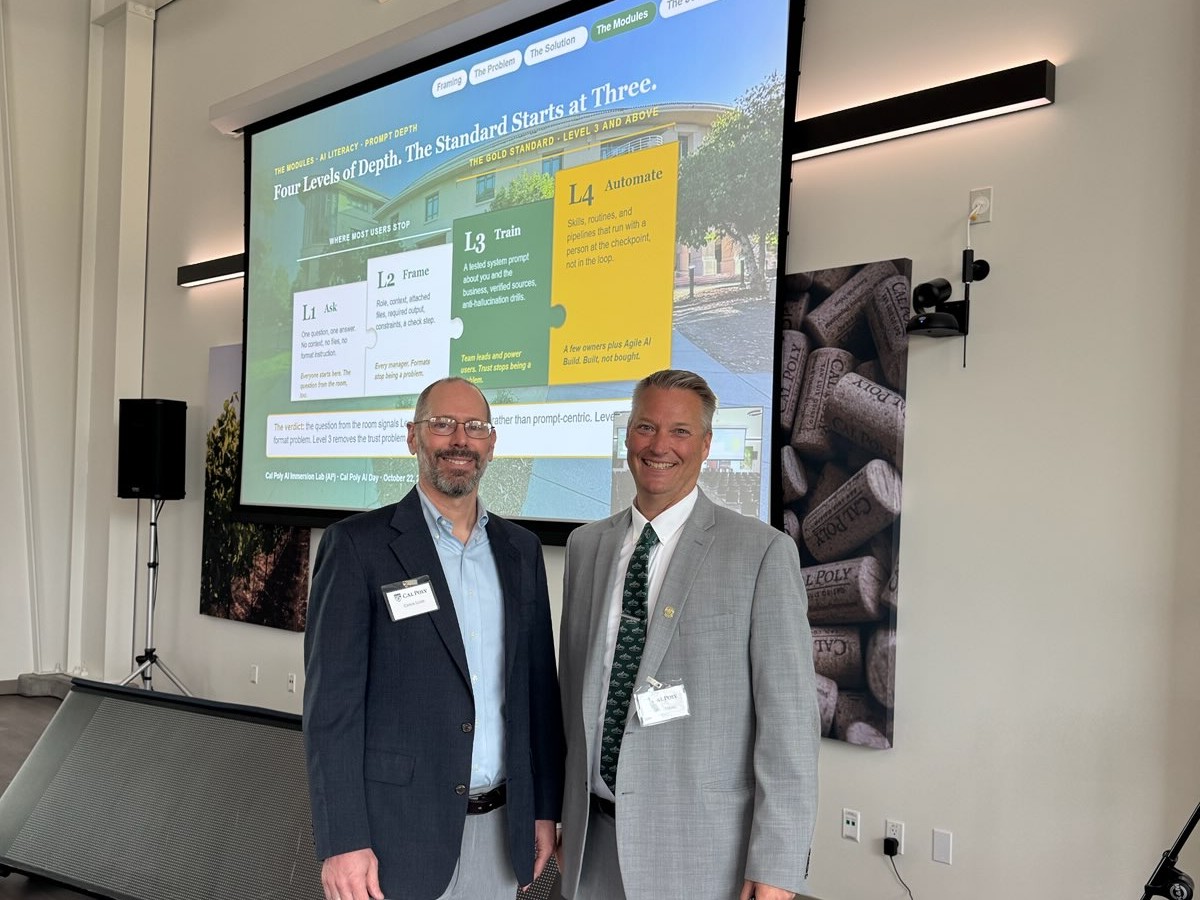
On Oct. 22, the Lab's leadership, faculty team, and program architecture were introduced to the campus and to industry, alongside the digital ribbon cutting for Cal Poly's new AI Factory. The Founding Director walked the room through the Lab's framing, the problem it answers, the solution, the modules, and the journey ahead, and the standard the Lab holds itself to was stated in public for the first time: Level 3 and above.

With the unveiling complete, the Lab's public introduction is behind it. Client names and program specifics remain confidential.

What is public: the Lab exists, it is delivering, and it is led from Cal Poly.


Read the Director's letter AI Day website

What the day delivered

  • Program: how the Lab engages an organization from discovery to delivery
  • AI Literacy: the two-day Applied AI Leadership Immersion and the Four Levels of Depth, from Ask and Frame to Train and Automate
  • Agile AI Build: a live prototype demonstration against partner data
  • The team: Principal Leads, Principals, and administrative partners, named and present


Mustang families had the first look on Oct. 3. Read the Family Weekend recap

  The Founding Director of the Noyce School of Applied Computing and the Founding Director of the AI² Immersion Lab in front of the Four Levels of Depth slide at Cal Poly AI Day

Chris Lupo, Founding Director of the Noyce School of Applied Computing, with the Lab at the Four Levels of Depth.

  University leadership with the Founding Director at Cal Poly AI Day

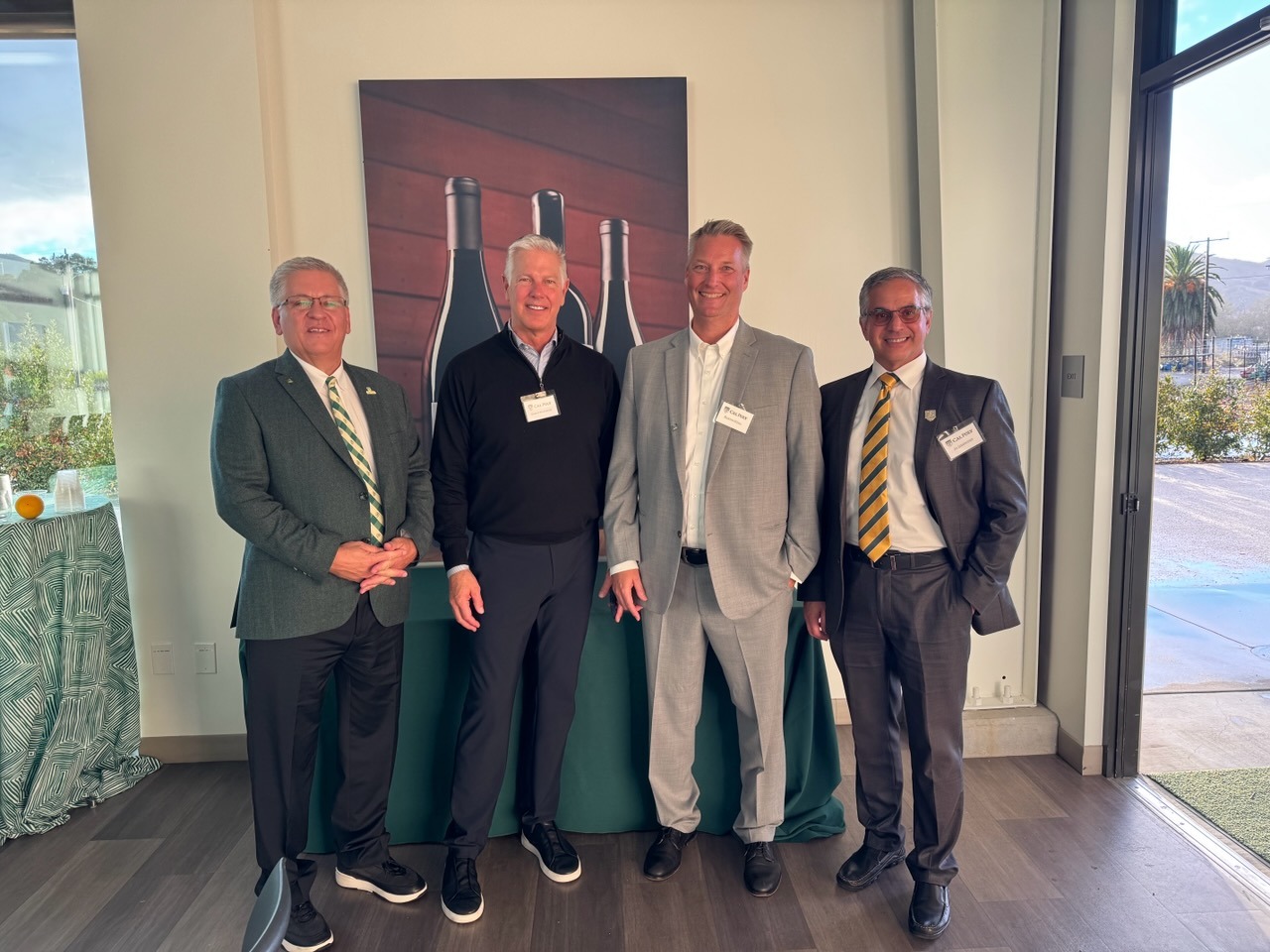
Executive support and partnership at Cal Poly AI Day.

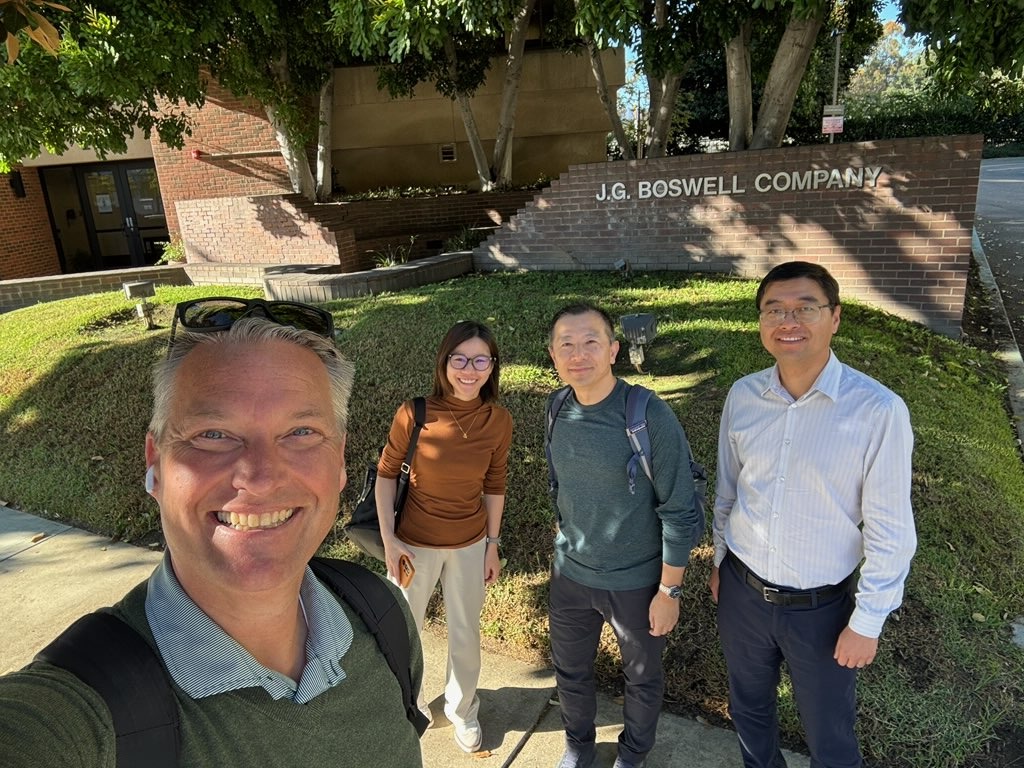
  The AI² immersion team on a client site, ready to deliver

The AI² immersion team on a client site, ready to deliver.


LOOKING BACK · SATURDAY, OCT. 3, 2026

Families had the first look

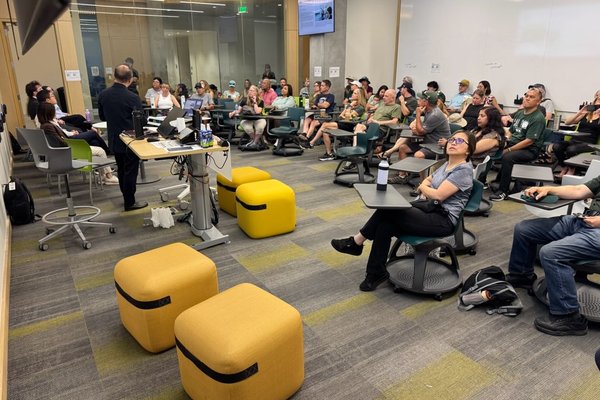
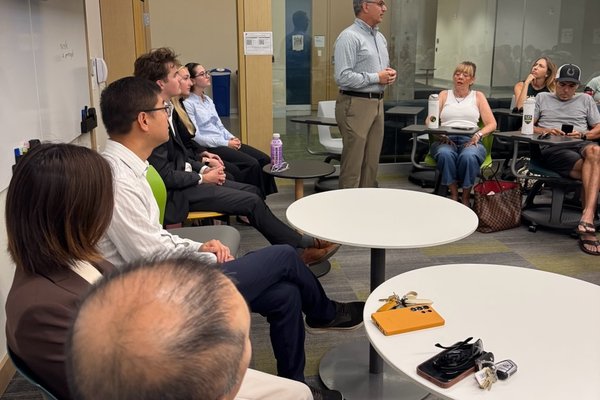
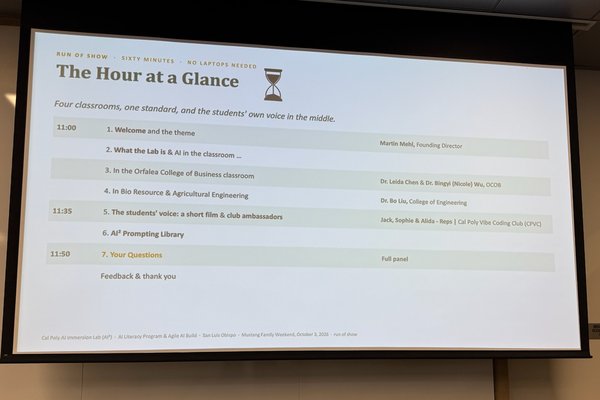
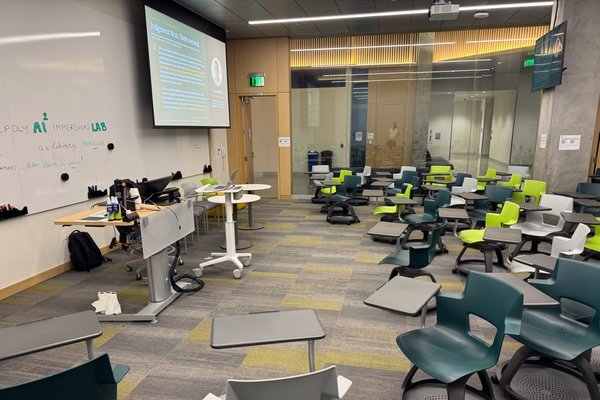
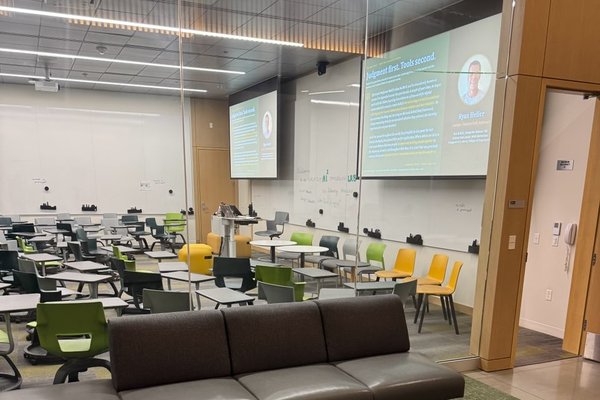
On the Saturday of Mustang Family Weekend, parents, future Mustangs, and neighbors filled an active learning classroom in the Frost Center for the Lab's first public session: a portfolio showcase built on one idea, judgment first, tools second.


Faculty from Communication Studies, the Orfalea College of Business, and BioResource and Agricultural Engineering showed how one standard holds across four classrooms, from a first-year speech to sensor data in the field.


Students had their own voice in the middle of the hour: a short film from the Cal Poly Vibe Coding Club, followed by club ambassadors taking questions from the room.

Every family went home with the AI² Prompting Library.


Families fill a Frost Center classroom during the AI² Immersion Lab showcase at Mustang Family Weekend   A parent asks a question while the faculty and student panel listens   Projected agenda slide titled The Hour at a Glance
 
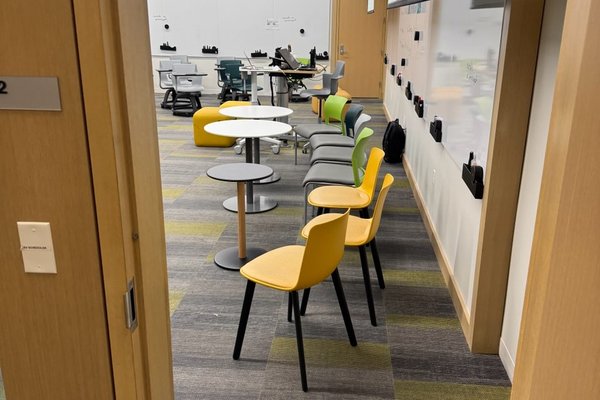
The classroom set for the showcase, with Cal Poly AI² Immersion Lab written on the whiteboard   Frost Center Room 122 seen through its glass wall, with the session theme Judgment first, Tools second on screen   View through the doorway of the active learning classroom before families arrived

William and Linda Frost Center for Research and Innovation, Building 181, Room 122


FROM THE DAY

·  CPVC student film
·  AI² Prompting Library
·  Oct. 22 unveiling recap


Milestones
SUMMER 2026 · MAY TO AUGUST · FROM CONCEPT TO OPERATION

May 2026   Lab founded
The exploratory team founds the Lab under the Office of the Provost and leads it from day one; the two-track architecture, AI Literacy and Agile AI Build, is designed.


August 2026   Founding Director title conferred
The Provost formalizes Martin Mehl's title from acting to Founding Director; the interdisciplinary faculty team is assembled and the August planning sprint sets the delivery cadence.


FALL 2026 · SEPTEMBER TO NOVEMBER · THE FIRST SEMESTER IN CAL POLY HISTORY

Sept. 11, 2026   Two-day immersion format locked
Internal showcase of the Applied AI Leadership Immersion, from personal productivity to enterprise workflow reinvention.


Sept. 15, 2026   Founding Director announced
The Lab's scope teased in the COMS department newsletter; venue confirmed for Mustang Family Weekend.


Oct. 3, 2026   Mustang Family Weekend showcase
Held in Frost Center 181-122: a portfolio showcase for families, a student segment from the Cal Poly Vibe Coding Club, and the release of the AI² Prompting Library.


Oct. 22, 2026   Public unveiling at AI Day & Provost's Showcase
Held at the Swanson Center of Effort alongside the AI Factory digital ribbon cutting. The team, the program architecture, the Four Levels of Depth, and a live build were presented to campus and industry. The Lab's public introduction is complete.


Nov. 01 onward   Delivery continues
Pilot engagements proceed with the inaugural agriculture cohort; interest for the next cohort is being registered.


Events

AI Day & Provost's Showcase, held Oct. 22. Read the recap
 

Mustang Family Weekend AI Showcase, held Oct. 3. Read the recap
 

Both public events are concluded. Four industry deliveries through October; delivery continues through the fall.


AI² Prompting Library

Twenty-two prompts and five verification drills for families, students, and managers. Released to families at Mustang Family Weekend on Oct. 3.

Open the library


Industry & Media Inquiries

Industry inquiries route through the Founding Director. Press requests route through University Communications and Marketing.


ucm@calpoly.edu


Speaking & Advisory

Invitations for the Founding Director and faculty to speak, advise, or partner on AI literacy and change management.
 

Book a conversation


 Media & Commentary

The Lab's faculty are available to journalists, podcasters, and campus colleagues for comment on artificial intelligence in academia, research, and the working world. Press requests route through University Communications and Marketing so the university speaks with one voice; the Lab's faculty are listed there alongside Cal Poly's other subject-matter experts.


Expertise, by area

Four clusters, each anchored in a college area. The lead term in bold is where the Lab speaks with the most depth.


PEOPLE & CHANGE
College of Liberal Arts · Communication Studies

  • AI literacy and AI fluency: what students, faculty, and managers need to know, and what "knowing" means
  • Change management for AI adoption in organizations and universities
  • Human judgment, verification, and trust in AI systems
  • Mentorship, apprenticeship, and the Learn by Doing pipeline

Lab voices: Martin Mehl · Dr. Page Chen · Dr. Bingyi (Nicole) Wu · Dr. Brennan Davis


BUSINESS & ANALYTICS
Orfalea College of Business

  • Decision support: analytics and information systems a manager can verify
  • Human-AI collaboration: working alongside AI, with the decision kept human
  • Executive and manager immersion: from personal productivity to enterprise workflow

Lab voices: Dr. Leida Chen, AI Faculty Fellow · Dr. Bingyi (Nicole) Wu · Martin Mehl · Dr. Brennan Davis


AGRICULTURE & APPLIED BUILD
College of Agriculture, Food & Environmental Sciences

  • AI in agriculture and family-owned business
  • Sensing and Agile AI Build: from field data to a working prototype
  • Agribusiness finance and market economics
  • Organic systems and applied crop research

Lab voices: Dr. Bo Liu · Dr. Xiaowei Cai · Dr. Matthew Grieshop


POLICY, ETHICS & EMERGING ISSUES
Across the colleges

  • AI policy in education and government, from GDPR to EU AI Act Article 4 literacy obligations
  • Emerging issues: sustainability, "kill switch" governance, ethics, and criticism

Lab voices: Martin Mehl


Who to contact

Press & media inquiries
University Communications and Marketing, Cal Poly
ucm@calpoly.edu · 805-756-1111
Media Relations · Cal Poly Faculty Experts directory


Founding Director
Martin Mehl
calendly.com/mmehl


AI Faculty Fellows, college by college
When a question sits inside one college, that college's AI Faculty Fellow is the subject-matter lead for AI in its disciplines. The expertise areas on this page name the Lab's own voices; the Fellows extend that reach across the university.

• Meet the AI Faculty Fellows, college by college
• Ethics + Emerging Sciences Group


Subject-matter experts across campus
Cal Poly's 1,400 faculty include experts in technology ethics, data science, cybersecurity, agriculture, and public policy. University Communications and Marketing maintains the Faculty Experts directory and will match a journalist with the right voice when the question reaches beyond the Lab.

Client names and program specifics are not discussed publicly. Interviews on the Lab's methods, findings, and public events are welcome.


 Working with the Lab


PILOT COHORT · NEXT COHORT BY REGISTERED INTEREST

Be in the next cohort.

Engagements are currently limited to the pilot client pool while the first programs are delivered. The Lab is not taking new clients yet. If your organization wants to be in the next cohort, register interest and we will reach out when the pipeline opens.
 

What an engagement can include: the Applied AI Leadership Immersion workshop, an Agile AI Build against your own data, and advisory support for AI governance, strategy and deployment decisions, operating model reviews, and communities of practice, delivered with change management throughout and in partnership with experts and executive leadership at the Orfalea College of Business.
 

Register interest by email

Interest is reviewed as the next cohort opens.


ON CAMPUS · FACULTY, STAFF, AND STUDENTS

One campus, one door.

What the Lab tests in the field comes home to Cal Poly. The Lab is building partnerships with the university's existing learning and development hubs so that faculty, staff, and students benefit from the same field-tested, applied research and workshops in one centralized, collaborative environment, rather than through parallel efforts that never meet.
 

This may include divisions, departments, centers, and mission-critical partnerships across the university. The Lab never hesitates to reach out proactively to see where collaborative ground can be found, and it welcomes the same from any unit that sees a fit.
 

Start a campus conversation AI at Cal Poly AI Faculty Fellows

What a campus partnership can look like

  • Shared workshops: the Lab's applied AI literacy sessions delivered through an existing hub's calendar and audience
  • Applied research, shared: field-tested methods, prompt libraries, and verification drills made available to campus units
  • Student pathways: engagement, apprenticeship, and portfolio work tied to live Lab projects
  • Mission-critical partnerships: divisions and departments whose work depends on getting AI adoption right

Centralized where it counts, collaborative everywhere else.

Cal Poly AI² Immersion Lab · San Luis Obispo, California · Media inquiries: University Communications and Marketing · ucm@calpoly.edu · 805-756-1111 · Web Accessibility Statement · Privacy Notice


Related Content